
Eyewear Manufacturing Process
From Raw Materials to Finished Eyewear
Every pair of eyeglasses requires a series of manufacturing steps to achieve the desired appearance, structure, comfort, and functionality.
At AGADA, our eyewear production processes are adapted to different materials and frame designs. Acetate, metal, and TR90 frames each require specific processing techniques, equipment, and finishing methods.
From material preparation and frame processing to assembly, quality inspection, and packaging, each production stage contributes to the final product.
We support eyewear brands, optical retailers, and distributors with OEM and ODM manufacturing solutions, helping turn product concepts and design requirements into finished eyewear collections.
1. Acetate Eyewear Manufacturing Process
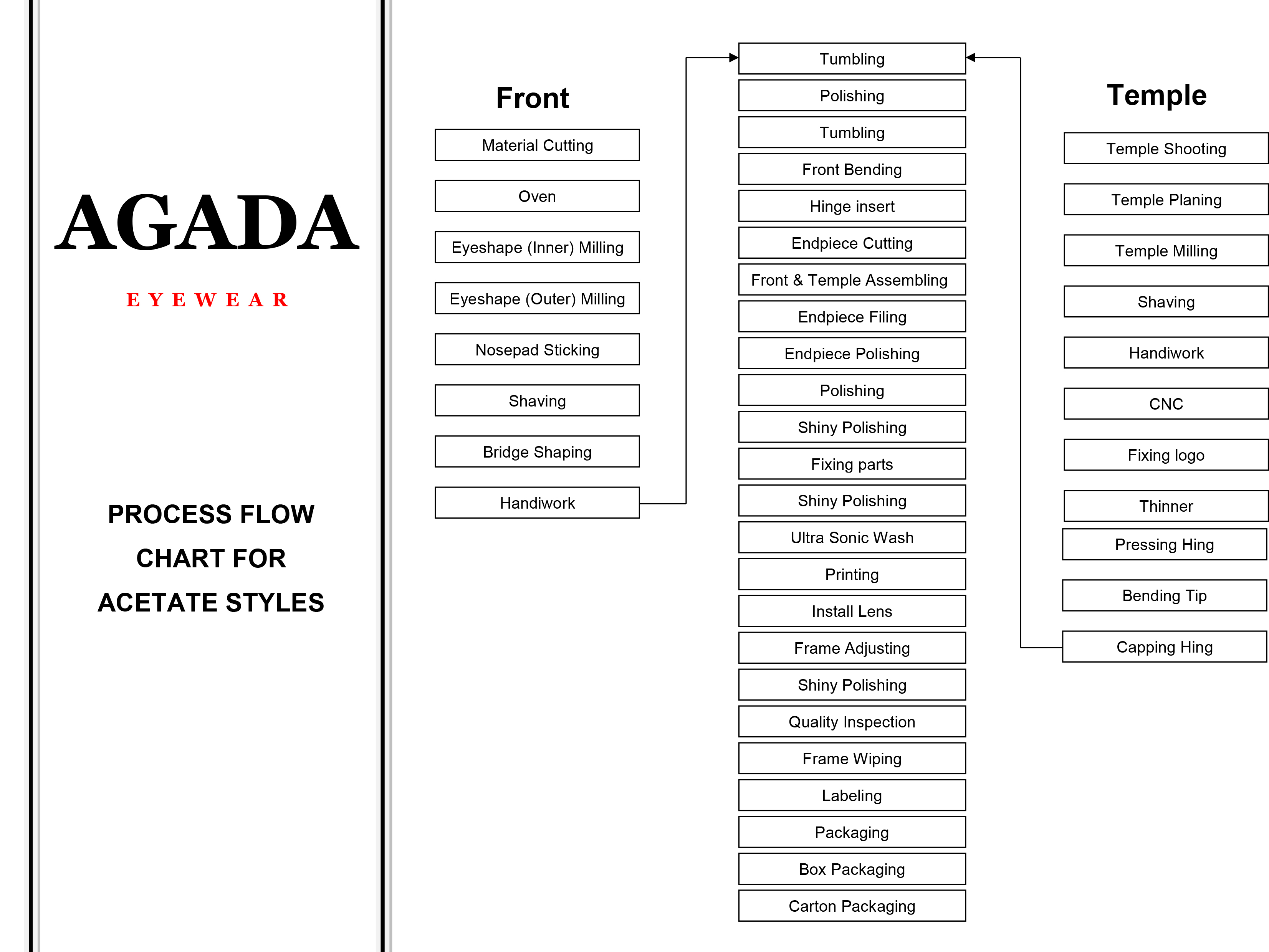
Acetate eyewear requires careful material processing and detailed frame finishing. The production process involves shaping acetate sheets, machining frame components, assembling hinges, and refining the frame surface.
Our acetate eyewear manufacturing process may include the following stages:
Material Cutting
Acetate sheets are cut according to the required frame dimensions and design specifications, preparing the material for further processing.
Frame Milling and Shaping
CNC and other processing techniques are used to shape the inner and outer edges of the frame, helping achieve the intended frame structure and design.
Bridge and Temple Processing
The bridge and temples are shaped and processed according to the frame design. Additional handwork may be required to refine specific details.
Hinge Installation and Component Assembly
Hinges and other frame components are installed and adjusted to support proper opening, closing, and overall frame functionality.
Polishing and Surface Finishing
Tumbling, polishing, and additional finishing operations help improve the frame surface, edges, and overall appearance.
Printing and Final Assembly
Brand logos and other required details are applied. Lenses and remaining components are installed according to the product specifications.
Final Inspection and Packaging
Finished frames are inspected before labeling and packaging according to the agreed order requirements.
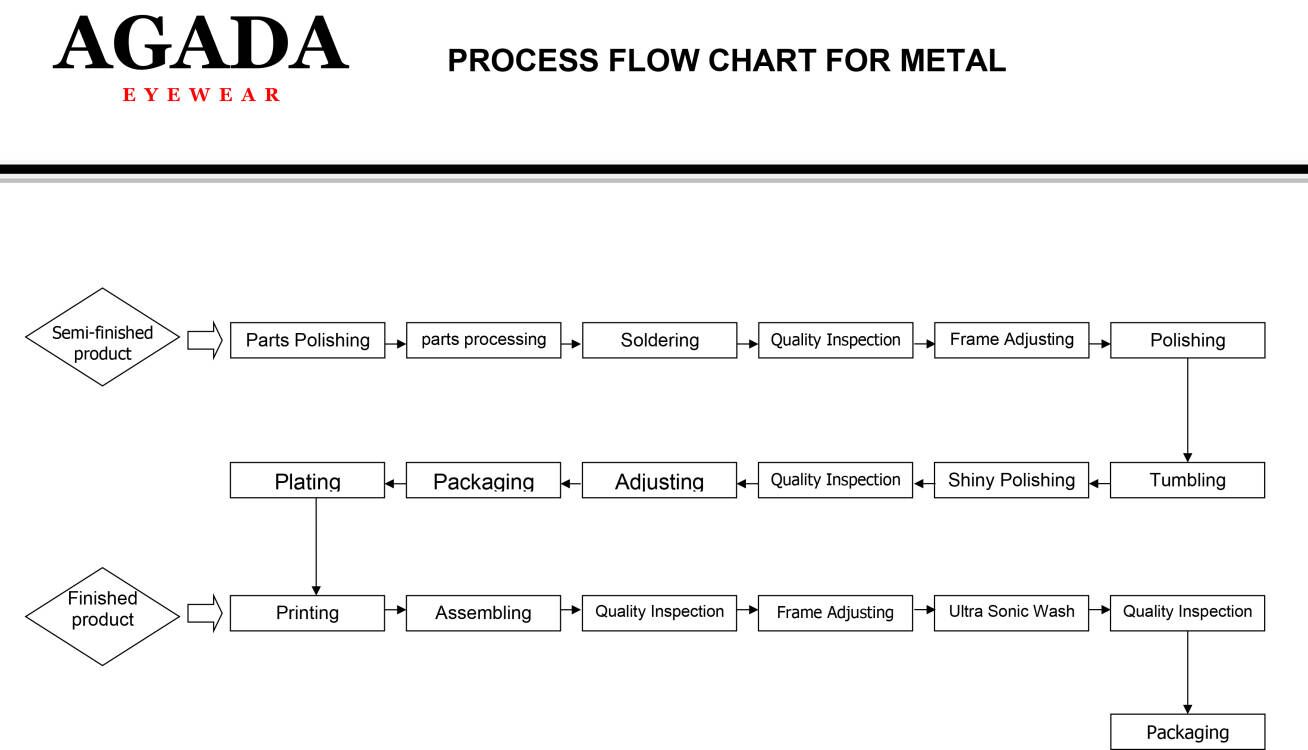
2. Metal Eyewear Manufacturing Process
Metal eyewear manufacturing involves multiple component-processing and assembly operations. Accuracy in component fitting, soldering, surface treatment, and frame adjustment is important to the finished product.
The metal eyewear production process generally includes:
Component Processing
Metal frame components are prepared and processed according to the required frame structure and specifications.
Parts Polishing
Individual components are polished to improve surface smoothness before subsequent processing.
Soldering and Assembly Preparation
Metal parts are joined through appropriate soldering operations, followed by preparation for further assembly.
Quality Inspection and Frame Adjusting
Components are checked during production, and frame structures are adjusted to meet the required specifications.
Polishing and Surface Treatment
Further polishing and finishing operations help achieve the required surface appearance. Plating is applied according to the selected product design and finish.
Logo Printing and Component Assembly
Branding details are applied, and the frame components are assembled according to the product requirements.
Final Cleaning and Inspection
Frames undergo cleaning, adjustment, and final quality checks before packaging.
3. Quality Control Throughout the Production Process
Consistent product quality is essential for eyewear brands building long-term relationships with their customers.
At AGADA, quality inspection is incorporated into different stages of eyewear manufacturing rather than being limited to the final inspection.
Depending on the product type and order specifications, inspection may cover:
Material and Component Checks: Reviewing incoming materials and components against the agreed product requirements.
Frame Appearance: Checking surface finish, color consistency, edges, and visible defects.
Assembly Quality: Checking hinge installation, component fitting, and frame construction.
Functional Checks: Checking frame opening and closing, structural stability, and other relevant functions.
Final Product Inspection: Reviewing finished eyewear before cleaning, labeling, and packaging.
Specific inspection items and acceptance criteria can be confirmed with customers during order discussions and sample approval.
4. TR90 Eyewear Manufacturing Process
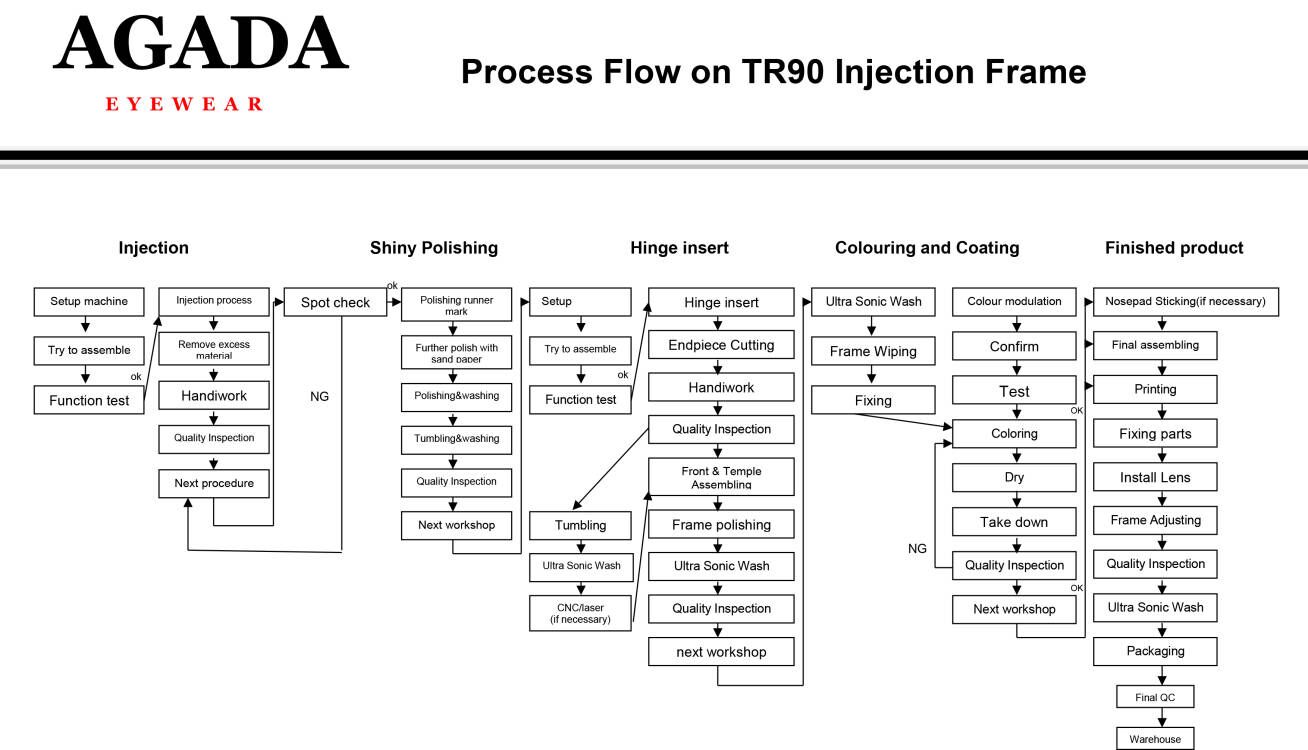
TR90 eyewear uses an injection molding process to create lightweight frame structures. The production process focuses on molding consistency, component assembly, surface finishing, and product appearance.
Our TR90 frame manufacturing process may include:
Injection Molding
TR90 material is processed through injection molding to form the frame components according to the mold design.
Trimming and Hand Finishing
Excess material is removed, and frame edges are refined through additional processing and manual finishing where required.
Polishing and Cleaning
Polishing and cleaning operations help improve the appearance of molded frame components and prepare them for assembly.
Hinge Installation
Hinges and other functional components are installed and checked to ensure proper fitting and operation.
Coloring and Coating
Coloring and coating processes are carried out according to the selected design and product specifications.
Final Assembly
Required components, including nose pads where applicable and lenses, are installed. Printing and other finishing details are completed.
Frame Adjustment and Quality Inspection
Finished frames are adjusted and inspected for appearance, assembly, and functional requirements before packaging.
5. Supporting Custom Eyewear Manufacturing
Different eyewear brands have different design concepts, customer groups, and market positioning. A suitable manufacturing process needs to match the product requirements.
AGADA supports custom eyewear projects involving:
Acetate, TR90, and metal frame materials
Custom frame shapes, colors, and sizes
Logo printing and branding details
Temple and component customization
Lens installation based on product specifications
Customized packaging and labeling
Whether you are developing a new collection or expanding an existing product range, our team can discuss the manufacturing requirements based on your designs, reference samples, and target market.
6. From Sample Approval to Mass Production
A clear production process helps reduce misunderstandings and supports smoother cooperation between eyewear brands and manufacturers.
Our OEM and ODM project coordination generally follows these steps:
Step 1 – Project Discussion
Share your product ideas, reference images, technical drawings, or existing samples with our team.
Step 2 – Design and Material Confirmation
Discuss frame structure, material options, colors, branding details, and other product specifications.
Step 3 – Sample Development
Arrange sample development according to the confirmed requirements for customer evaluation.
Step 4 – Sample Review and Approval
Review the sample's appearance, fit, functionality, and customized details before confirming production.
Step 5 – Mass Production
Proceed with production according to the approved sample and agreed order specifications.
Step 6 – Final Inspection and Delivery
Complete the required inspections, packaging, and order preparation before shipment.
Looking for an Eyewear Manufacturer for Your Next Collection?
Understanding the manufacturing process is an important step when selecting an eyewear supplier. AGADA works with brands, retailers, and distributors to discuss material selection, product development, customization, and production requirements.
Send us your designs, reference samples, or product specifications. Our team will help you explore suitable manufacturing options for your eyewear project.
Start Your OEM & ODM Eyewear Project
Contact AGADA to discuss your requirements and request a quotation.