


Children's Eyewear Sourcing What Importers Should Consider
Sourcing children's eyewear requires more attention than selecting attractive frame designs. Importers, wholesalers, and private label brands need to evaluate product safety, age-appropriate sizing, material quality, lens specifications, and regulatory requirements before placing bulk orders.
A reliable sourcing process should begin with a clear understanding of the target market and intended users. These decisions influence product design, material selection, testing requirements, packaging, and supplier evaluation.
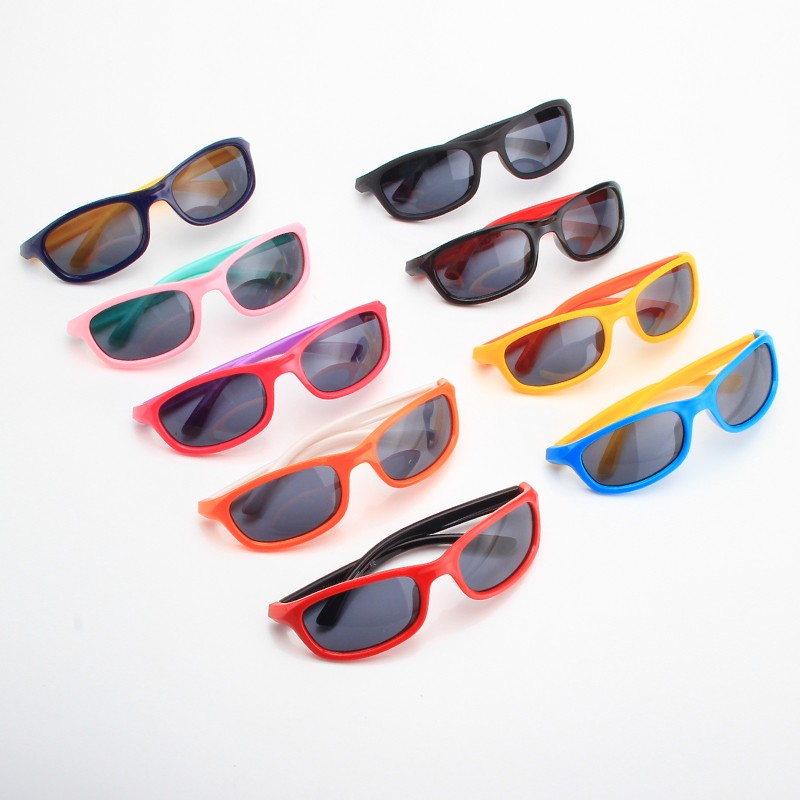
1. Define Your Target Age Groups and Product Range
Children's eyewear should be developed around different age groups and fitting requirements. Frame width, bridge design, temple length, and overall weight can affect how comfortably a product fits.
Importers should avoid treating all children's products as one category. A collection may include optical frames for everyday use, sunglasses for outdoor activities, and selected styles for older children.
Some buyers also develop adult collections alongside children's products. Classic Eyeglasses and Fashion Eyeglasses can provide everyday and trend-oriented options, while Sport Eyeglasses can serve customers looking for eyewear designed for active use.
2. Evaluate Frame Materials and Construction
Material selection affects frame weight, flexibility, appearance, and durability. Buyers should compare suitable acetate, plastic, and metal options based on the intended age group and product positioning.
Important construction details include:
Smooth edges without sharp or rough areas
Secure hinge connections and stable temples
Properly finished nose and ear contact areas
Consistent frame dimensions and assembly
Suitable flexibility for the intended application
For a Kids Optical Frame collection, buyers should pay particular attention to fit, lightweight construction, and everyday wearing comfort. The frame should be evaluated as a complete product rather than selected by material name alone.
3. Check Lens Specifications and Product Safety
Lens requirements should be confirmed before sample approval. Buyers need to identify the lens material, optical properties, UV protection specifications where applicable, and any required impact-resistance testing.
For Kids Sunglasses, UV protection and impact resistance are separate performance considerations. Importers should request relevant test documentation and confirm that it covers the actual product configuration.
In the United States, sunglasses are subject to applicable FDA requirements, including impact-resistance certification under 21 CFR 801.410. Children's products may also require additional testing and certification depending on their classification and applicable safety rules. FDA guidance.
4. Confirm Compliance Requirements Before Ordering
Regulatory requirements vary according to the destination market, product classification, materials, and intended use.
For US imports, buyers should identify applicable Consumer Product Safety Improvement Act (CPSIA) requirements and determine whether third-party testing and a Children's Product Certificate (CPC) are necessary. The importer is responsible for issuing the required CPC for covered children's products manufactured overseas, based on valid compliance testing. CPSC certification guidance.
For European markets, buyers should identify applicable EU product safety, chemical restrictions, and sunglasses requirements. Do not assume that one test report automatically covers every country or product category.
5. Assess the Manufacturer's Quality Control
Before choosing a supplier, ask how the manufacturer manages sample approval, material consistency, assembly inspection, and finished-product checks.
A practical supplier evaluation should include:
Product samples from the proposed collection
Material and component specifications
Relevant laboratory test reports
Frame dimension and workmanship checks
Logo and packaging confirmation
Production inspection procedures
Compare the approved sample with bulk production to identify differences in color, dimensions, finishing, and assembly.
6. Plan MOQ, Packaging, and Repeat Orders
A children's eyewear collection may contain several sizes, colors, and designs. Importers should calculate the quantity required for each style and color rather than considering only the total order volume.
Also confirm minimum order quantities, sample costs, production lead times, packaging options, and replenishment arrangements directly with the manufacturer.
At AGADA Eyeglasses, buyers can discuss customized eyewear development across classic, fashion, sport, and children's categories. Share your target age groups, product specifications, reference designs, and estimated quantities to evaluate suitable OEM and ODM solutions for your market.
A successful children's eyewear sourcing project depends on more than competitive pricing. Appropriate product design, verified compliance, and consistent manufacturing quality are essential for building a reliable collection.